
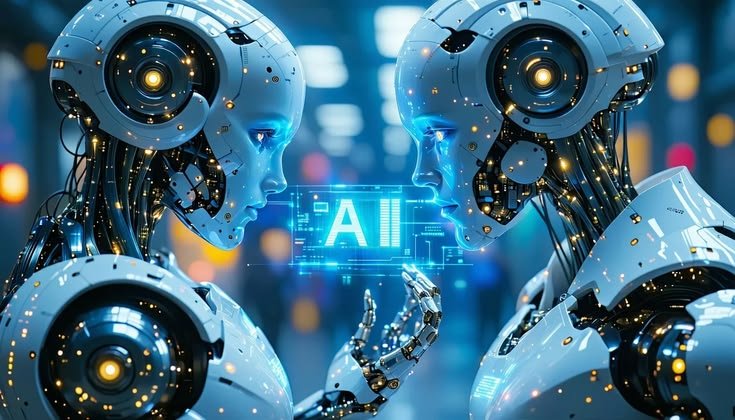
Artificial Intelligence is developing rapidly and becoming part of many areas of modern life. AI tools are already being used for writing, image generation, customer support, software development, data analysis, education, healthcare, finance, transportation, and business operations. As computing power, data availability, and AI research continue to improve, the role of artificial intelligence is expected to become even larger.
The future of AI technology will not simply be about creating more powerful models. It will also involve making AI systems more useful, reliable, secure, efficient, and easier to integrate into everyday applications.
Understanding the major trends can help individuals and businesses prepare for the changes that AI may bring.
AI Will Become More Integrated Into Everyday Software
One of the biggest changes expected in the future is the integration of AI into software people already use.
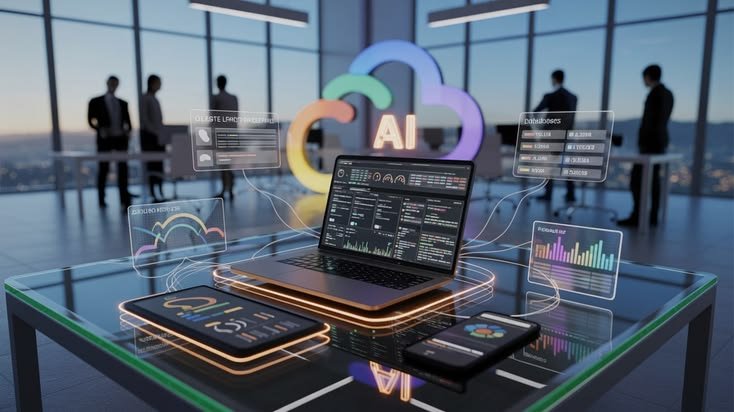
Instead of opening a separate AI application, users may increasingly find AI features directly inside email platforms, office software, browsers, search tools, smartphones, design applications, and business systems.
For example, an email application could summarize long conversations, identify important messages, and suggest responses. A document editor could help organize information, rewrite text, or create an outline.
This type of integration could make AI feel less like a separate technology and more like a standard software feature.
AI Assistants May Become More Capable
AI assistants are expected to become more useful as models improve.
Current AI assistants can answer questions, summarize documents, generate text, write code, and perform other tasks. Future systems may be able to manage more complicated workflows while interacting with multiple applications.
For example, an AI assistant could potentially help organize a project by analyzing documents, creating a task list, preparing reports, and identifying missing information.
The usefulness of these assistants will depend not only on model intelligence but also on how safely and reliably they can interact with external systems.
Multimodal AI Will Continue to Grow
Multimodal AI refers to systems that can process multiple types of information, such as text, images, audio, video, and other data.
Instead of working with only written prompts, future AI systems are likely to become better at combining different forms of information.
A user might provide a photograph, a voice explanation, and a document and ask an AI system to analyze all three together.
Multimodal capabilities can be useful in education, customer service, healthcare research, design, engineering, content creation, and business analysis.
AI Will Improve Software Development
Artificial Intelligence is already changing software development.
AI coding tools can help developers generate code, explain existing code, identify errors, write tests, and document projects.
Future systems may assist with larger parts of the development process. They could help developers understand complex codebases, suggest architectural improvements, test applications, and automate repetitive development tasks.
However, human developers will continue to play an important role. Software development requires understanding requirements, security, system architecture, business goals, and user needs.
AI can support these activities but does not eliminate the need for human review.
More Businesses Will Adopt AI
AI adoption is expected to increase across businesses of different sizes.
Large organizations may use AI for advanced data analysis, customer service, forecasting, automation, cybersecurity, and operational planning.
Small businesses may use AI for marketing, content creation, scheduling, customer communication, research, and administrative tasks.
As AI tools become easier to access, businesses may not need large technical teams to benefit from basic AI applications.
The main challenge will be choosing appropriate use cases and ensuring that AI-generated results are reviewed when accuracy matters.
AI in Healthcare
Healthcare is one area where AI could have significant impact.
AI can already support medical research, medical image analysis, drug discovery, administrative processes, and data analysis.
Future AI systems may help researchers process large datasets more efficiently and identify potential relationships that require further investigation.
AI may also help healthcare organizations reduce administrative workloads by processing documents and organizing information.
However, healthcare is a high-stakes field. AI systems should not automatically replace qualified medical professionals. Accuracy, privacy, safety, testing, and regulatory requirements will remain important.
AI in Education
Education is another area likely to experience continued AI development.
AI tools can provide explanations, generate practice questions, summarize information, support language learning, and help students organize study materials.
Teachers may use AI to prepare educational content, create lesson materials, and analyze certain types of student information.
Future systems could provide more personalized educational experiences based on a student’s learning pace and needs.
At the same time, schools and students will need to address concerns about academic integrity, incorrect AI-generated information, privacy, and overreliance on automated systems.
AI and Robotics
Artificial Intelligence and robotics are increasingly connected.
Robots can use AI to process sensor information, recognize objects, plan movements, and interact with environments.
Future developments may improve robots used in manufacturing, warehouses, agriculture, healthcare support, and other industries.
Robots may become better at handling environments that are less predictable than traditional industrial settings.
However, physical-world robotics presents significant technical challenges. Machines must safely understand their surroundings and respond to unexpected situations.
AI in Transportation
AI can play an important role in transportation.
Current systems already use AI and Machine Learning for navigation, traffic prediction, driver assistance, logistics, and route optimization.
Future transportation systems may use more advanced AI to coordinate vehicles, improve traffic flow, optimize delivery routes, and support autonomous driving technologies.
Autonomous transportation will require extensive testing and safety systems because real-world environments contain unpredictable events.
More Personalized Digital Experiences
AI can analyze user behavior and preferences to provide personalized experiences.
Streaming services can recommend content. Online stores can suggest products. News applications can organize information according to user interests.
Future AI systems may make personalization more dynamic.
For example, digital services could adjust interfaces, recommendations, explanations, and notifications according to a user’s current needs.
Personalization can improve convenience, but it also raises privacy questions. Users should have appropriate control over how their information is collected and used.
AI Will Become More Efficient
AI models can require significant computing resources, especially large models.
Research is therefore focused not only on increasing model capabilities but also on improving efficiency.
Smaller models may become more capable and useful for specific tasks. Hardware improvements may also allow AI applications to operate faster while using fewer resources.
AI systems may increasingly run directly on smartphones, computers, vehicles, and other devices instead of always depending on remote data centers.
This could improve response times and reduce the need to send certain information to external servers.
AI on Personal Devices
AI processing on local devices is likely to become more common.
Modern smartphones and computers increasingly include hardware designed to support AI-related workloads.
Running AI locally can offer several benefits, including faster responses and reduced dependence on internet connectivity for certain functions.
It may also provide additional privacy advantages when information can be processed directly on the device.
However, local AI systems will still have limitations based on available hardware and model size.
AI Agents and Automated Workflows
One emerging direction is the development of AI systems that can perform multi-step tasks.
Rather than simply responding to one prompt, an AI agent may be designed to plan a sequence of actions and use different tools to complete a goal.
For example, an AI system could analyze a dataset, create a report, identify important findings, and prepare a summary.
These systems could improve workplace productivity, but they also create new challenges. Organizations will need controls to prevent mistakes, unauthorized actions, and security problems.
AI and Cybersecurity
Artificial Intelligence is likely to play an increasingly important role in cybersecurity.
AI can help analyze large numbers of events and identify unusual patterns. Security systems may use Machine Learning to detect suspicious activity and prioritize alerts.
At the same time, attackers can also use AI to improve certain cyber threats.
This means cybersecurity may become an ongoing competition between defensive and offensive uses of AI.
Organizations will need strong security practices, monitoring, access controls, and human oversight.
AI Regulation and Governance
As AI becomes more influential, governments and organizations are developing policies and frameworks for responsible AI use.
Future AI development will likely involve greater attention to transparency, privacy, security, accountability, and safety.
Organizations may need to document how AI systems are used and establish procedures for reviewing automated decisions.
Regulation may differ between countries and industries, so businesses will need to monitor applicable requirements.
The Importance of Human Oversight
Even as AI becomes more capable, human oversight will remain important.
AI systems can make mistakes, misunderstand instructions, generate incorrect information, or produce unexpected results.
For low-risk tasks, automated systems may be able to operate with limited review. For important decisions, human involvement may remain necessary.
The future is therefore likely to involve collaboration between people and AI rather than complete replacement of human judgment.
New Jobs and Changing Skills
AI is expected to change the skills required in many professions.
Some repetitive tasks may become automated, while new responsibilities related to AI management, data analysis, system supervision, security, and AI integration may grow.
Workers may increasingly need to understand how to use AI tools effectively.
Skills such as critical thinking, communication, problem-solving, creativity, data literacy, and technical understanding may become increasingly valuable.
Learning how to verify AI-generated information will also be important.
Challenges for the Future of AI
AI development comes with several challenges.
One challenge is accuracy. More capable systems can still produce incorrect information.
Another challenge is bias. AI models can reproduce patterns present in their training data.
Privacy is another concern because AI systems may process large amounts of information.
Security is also important because powerful AI systems can be misused.
There are also questions about employment, intellectual property, misinformation, accountability, and the environmental cost of large-scale computing.
Addressing these issues will require cooperation between technology companies, researchers, governments, businesses, and users.
What Should People Expect From AI?
People should expect AI to become more common rather than disappear into the background.
AI will likely become integrated into everyday applications and professional workflows.
Instead of being limited to specialized technology companies, AI capabilities may become standard features across many industries.
However, the speed and impact of AI adoption will vary. Some industries may adopt new systems quickly, while highly regulated or safety-sensitive industries may move more slowly.
The most useful approach for individuals is to understand the basic capabilities and limitations of AI and learn how to use appropriate tools responsibly.
Conclusion
The future of AI technology is likely to involve more capable, efficient, integrated, and personalized systems.
AI may influence software development, healthcare, education, transportation, robotics, cybersecurity, business operations, and everyday digital services.
Multimodal systems, AI assistants, automated workflows, local AI processing, and AI-powered software are among the developments that could shape the next stage of the technology.
At the same time, challenges involving accuracy, privacy, security, bias, employment, and responsible use will remain important.
AI is unlikely to replace every human task. Instead, its greatest impact may come from changing how people perform tasks and how businesses organize their work.
The future of AI will therefore depend not only on technological progress but also on how effectively people design, regulate, understand, and use these systems.


Leave a Reply