
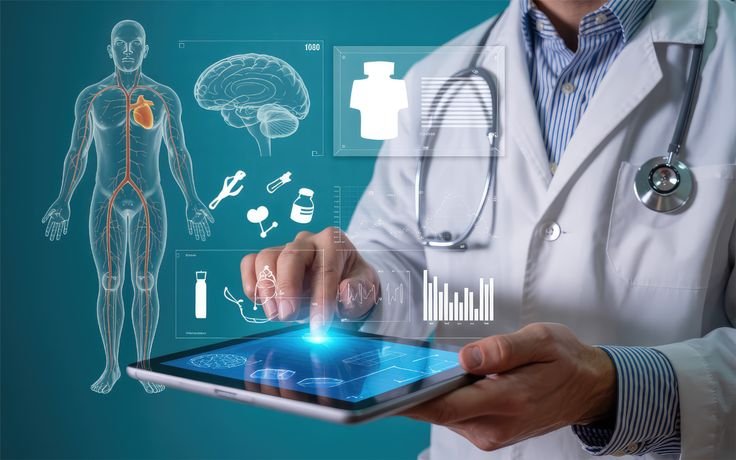
Artificial Intelligence is becoming an important part of modern medical technology. Hospitals, research organizations, medical technology companies, and healthcare professionals are exploring AI to analyze information, support medical imaging, improve administrative processes, assist research, and develop new healthcare applications.
AI-powered medical technology combines computer science with healthcare data and specialized algorithms. These systems can process large amounts of information and identify patterns that may be difficult to analyze manually.
However, AI in medicine is not a replacement for trained healthcare professionals. In many applications, its purpose is to provide assistance, improve efficiency, and support human decision-making.
Understanding how AI-powered medical technology works can help people better understand its potential benefits, limitations, and future role in healthcare.
What Is AI-Powered Medical Technology?
AI-powered medical technology refers to medical devices, software, platforms, and systems that use Artificial Intelligence to perform or support healthcare-related tasks.
These systems can use technologies such as Machine Learning, Deep Learning, Natural Language Processing, and Computer Vision.
Some AI systems analyze medical images. Others process patient records, assist with research, monitor health information, or automate administrative activities.
The technology can be used in hospitals, laboratories, research facilities, clinics, pharmaceutical companies, and other healthcare environments.
How AI Works in Medical Technology
AI systems generally require data, algorithms, computing resources, and a trained model.
For example, an AI system designed to analyze medical images may be trained using a large collection of images associated with specific findings.
During training, the system identifies patterns in the data.
After training and evaluation, the model can process new images and produce an output.
A qualified healthcare professional can then review the result and consider it alongside other clinical information.
The exact process varies depending on the application.
AI in Medical Imaging
Medical imaging is one of the most recognized applications of AI in healthcare.
Doctors use X-rays, CT scans, MRI scans, ultrasound images, and other imaging technologies to examine patients.
AI-powered image analysis systems can process these images and identify specific visual patterns.
For example, an AI system may highlight an area that requires closer examination.
This can help healthcare professionals review large numbers of images more efficiently.
AI image analysis is generally intended to support professional interpretation rather than independently determine a patient’s condition.
AI for Radiology
Radiology departments may handle a large volume of medical images.
AI can help prioritize certain images, detect specific patterns, and provide additional information to radiologists.
For example, an AI system may identify images that contain features associated with a particular condition and place them higher in a review queue.
This can potentially help professionals focus on cases that require attention.
However, AI performance can vary depending on the type of image, equipment, patient population, and specific task.
AI in Pathology
Pathology involves examining biological samples to help identify diseases and other conditions.
Digital pathology allows tissue samples to be converted into high-resolution digital images.
AI and Computer Vision systems can analyze these images and identify patterns.
Researchers are exploring AI for tasks such as detecting specific cellular features, assisting classification, and supporting research.
As with other medical AI applications, professional review remains important.
AI-Powered Diagnostic Support
AI can assist with certain diagnostic processes by analyzing multiple pieces of information.
A system may process symptoms, test results, medical history, or images and provide a list of possible patterns or findings.
This type of technology is generally considered decision support rather than an independent diagnosis.
Healthcare professionals can use AI-generated information as one input among many.
Clinical judgment, patient examination, and professional expertise remain essential.
AI in Electronic Health Records
Electronic Health Records contain information such as medical histories, laboratory results, medications, clinical notes, and other healthcare information.
Reviewing large records manually can be time-consuming.
Natural Language Processing and other AI technologies can help extract and summarize relevant information.
For example, an AI system could identify key information from clinical notes and organize it into a structured summary.
This may reduce administrative workload and make information easier to access.
AI for Medical Documentation
Medical professionals spend significant time documenting patient encounters.
AI-powered documentation tools can assist with transcription, summarization, and organization of clinical information.
A system may convert spoken information into text and create a draft clinical note.
The healthcare professional should review the generated document for accuracy before it becomes part of the official record.
This approach can reduce some documentation workload while keeping human oversight in place.
AI in Drug Discovery
Drug discovery is another area where AI-powered technology is being explored.
Researchers need to evaluate large numbers of chemical compounds and biological relationships when developing potential treatments.
AI can analyze large datasets and help researchers identify promising candidates.
Machine Learning models can assist in predicting certain properties of compounds or identifying relationships that may deserve further investigation.
AI does not eliminate laboratory experiments or clinical trials. Potential medicines still require extensive testing before they can be approved for use.
AI in Medical Research
Medical research produces huge amounts of data.
AI can help researchers organize and analyze this information.
For example, researchers can use Machine Learning to identify patterns in clinical datasets or analyze large collections of scientific publications.
AI can also support hypothesis generation and data analysis.
However, researchers must verify AI-generated conclusions using scientific methods.
An AI-generated result is not automatically evidence of a medical fact.
AI-Powered Wearable Devices
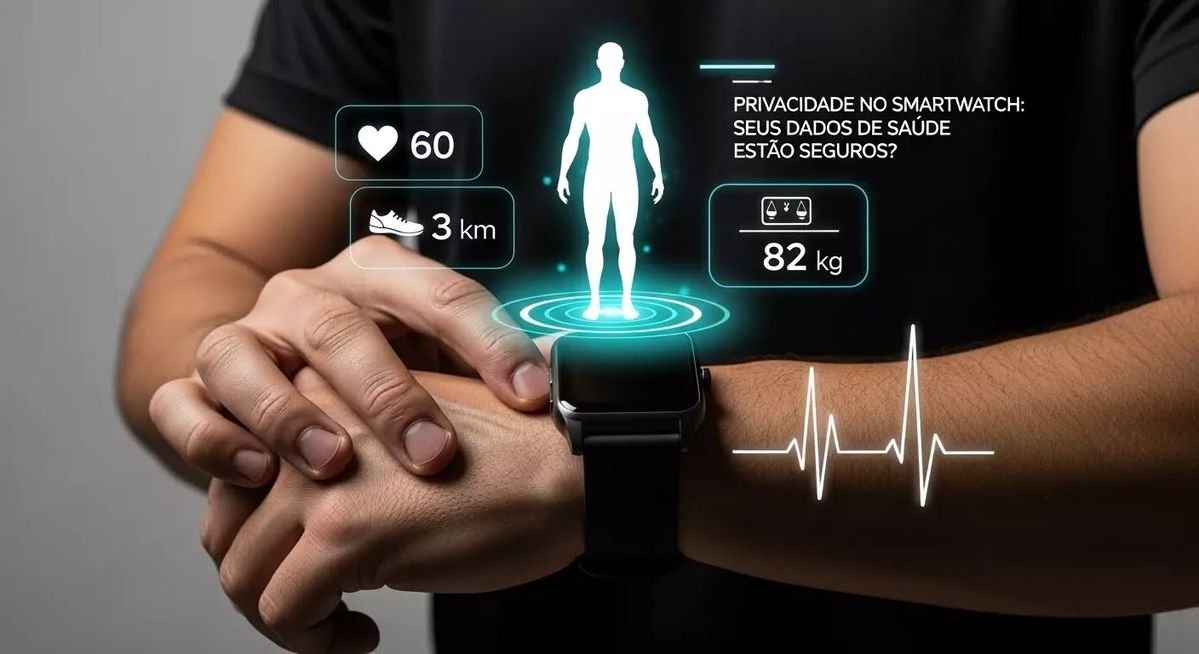
Wearable technology can collect information such as activity levels, heart rate, sleep patterns, and other measurements depending on the device.
AI can analyze these measurements and identify trends.
For example, an AI-powered health application may recognize changes in a user’s activity patterns and provide general notifications.
Wearable data can be useful for monitoring, but consumer devices should not automatically be treated as medical diagnostic systems.
The accuracy and intended use of each device should be considered carefully.
AI and Remote Monitoring
Remote patient monitoring allows certain health-related information to be collected outside traditional healthcare settings.
Connected devices can transmit measurements to healthcare systems.
AI may analyze incoming information and identify patterns that could require attention.
This can help healthcare teams manage large amounts of monitoring data.
However, automated alerts need careful design because too many false alerts can create unnecessary workload, while missed alerts may have serious consequences.
AI-Powered Surgical Technology
AI and robotics are also being explored in surgical environments.
Computer-assisted surgical systems can provide surgeons with enhanced control, visualization, or other technical capabilities.
AI may support image analysis, planning, or other parts of surgical workflows.
These systems do not necessarily operate independently.
Surgery involves complex decisions and physical actions that require trained professionals.
The role of AI and robotics depends on the specific technology and approved use.
AI in Personalized Medicine
Personalized medicine aims to consider individual characteristics when developing healthcare strategies.
AI can analyze large datasets containing genetic, clinical, and other types of information.
Researchers are investigating how AI can help identify patterns that may support more individualized approaches to prevention and treatment.
However, personalized medicine is complex, and AI predictions must be carefully validated before being used for clinical decisions.
AI in Emergency Healthcare
Emergency departments often need to process information quickly.
AI may assist with patient prioritization, data analysis, medical imaging, and administrative workflows.
For example, AI could help identify patterns in available information that require faster review.
Emergency healthcare is a high-risk environment, so AI systems must be carefully tested and monitored.
Human professionals must remain responsible for clinical decisions.
AI Chatbots in Healthcare
AI chatbots can answer general questions and provide information about healthcare services.
They may assist with appointment scheduling, basic administrative questions, or general health information.
Some systems may also ask users questions and provide guidance about whether professional evaluation may be appropriate.
However, healthcare chatbots have limitations.
They may misunderstand symptoms or provide inaccurate information.
They should not be treated as substitutes for qualified healthcare professionals, especially when symptoms may be serious or urgent.
Benefits of AI-Powered Medical Technology
AI-powered medical technology can provide several potential benefits.
Faster Information Processing
AI can analyze large datasets quickly.
Improved Workflow Efficiency
AI can reduce repetitive administrative tasks.
Medical Image Assistance
AI can help identify patterns in certain types of medical images.
Research Support
AI can help researchers process complex datasets and identify potential relationships.
Documentation Assistance
AI can reduce some of the time required for transcription and clinical documentation.
Monitoring
AI can help analyze health-related data collected over time.
These benefits depend on the quality, design, validation, and appropriate use of the technology.
Challenges of AI Medical Technology
AI-powered healthcare technology also has limitations.
Accuracy Problems
AI systems can produce incorrect results.
Data Bias
Models can perform differently across populations if their training data is not sufficiently representative.
Privacy Risks
Medical information is highly sensitive and requires appropriate security.
Technical Limitations
AI systems may fail when they encounter data that differs significantly from their training conditions.
Lack of Transparency
Some advanced AI systems can be difficult to explain.
Human Overreliance
Healthcare professionals may become overly dependent on AI recommendations if proper safeguards are not maintained.
Importance of Regulation
Medical AI systems can have significant consequences, so regulation and evaluation are important.
Different countries have different regulatory systems for medical devices and healthcare software.
Organizations developing or using medical AI need to understand applicable requirements.
Evaluation may involve testing safety, effectiveness, reliability, data protection, and other factors.
Regulation can help ensure that medical technology meets appropriate standards before widespread use.
Data Privacy and Security
AI-powered medical systems often require access to sensitive information.
Healthcare organizations must protect patient information from unauthorized access.
Security measures may include access controls, encryption, monitoring, and appropriate data management practices.
Patients should also understand how their information is collected and used when interacting with digital healthcare services.
Human Oversight
Human oversight is one of the most important principles in medical AI.
AI should generally support qualified professionals rather than operate without appropriate supervision.
Healthcare professionals can consider AI output alongside patient history, symptoms, physical examination, test results, and other information.
Human review can also identify situations where an AI system may have made an inappropriate recommendation.
The Future of AI-Powered Medical Technology
AI-powered medical technology is likely to become more integrated into healthcare systems.
Future applications may combine multiple types of information, including medical images, clinical notes, laboratory data, and monitoring information.
AI tools may also become better at supporting research, documentation, medical imaging, and administrative processes.
At the same time, healthcare organizations will need to address privacy, security, accuracy, bias, and regulatory requirements.
The most successful systems are likely to be those that provide clear benefits while maintaining appropriate human oversight.
Conclusion
AI-powered medical technology is changing how healthcare information can be analyzed and managed.
From medical imaging and electronic health records to drug discovery, wearable devices, research, documentation, and remote monitoring, AI is being explored across many areas of medicine.
The technology can process information quickly and support healthcare professionals with tasks that may otherwise require significant time.
However, AI is not perfect. It can make mistakes, reflect biases, create privacy concerns, and behave differently when exposed to unfamiliar data.
Healthcare is a high-impact field, so AI systems require careful testing, security, regulation, and human oversight.
The future of medical AI will likely depend on collaboration between healthcare professionals, researchers, engineers, regulators, and patients. When designed and used responsibly, AI-powered medical technology can support healthcare professionals and contribute to more efficient medical workflows and research.




Leave a Reply