

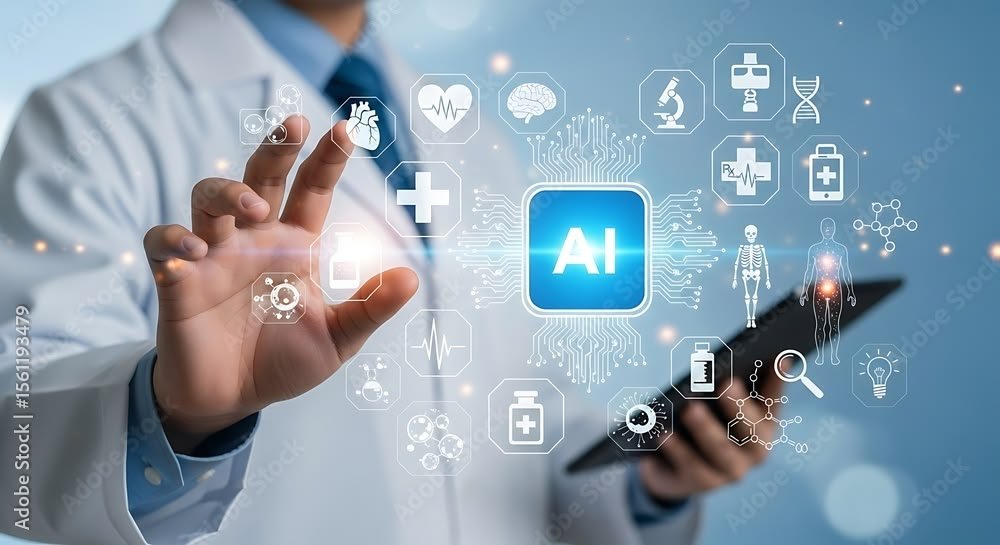
Artificial Intelligence is changing many industries, and healthcare is one of the areas where its impact is becoming increasingly important. Hospitals, researchers, medical professionals, technology companies, and healthcare organizations are exploring AI to process information, support clinical workflows, analyze medical images, discover potential treatments, and improve administrative processes.
Healthcare generates enormous amounts of information. Medical records, laboratory results, diagnostic images, research papers, patient histories, and monitoring data can be difficult to process manually. AI systems can help analyze large datasets and identify patterns that may require further attention.
However, AI in healthcare is not simply about replacing doctors or automating medical decisions. Its most useful role is often to support healthcare professionals by reducing repetitive work and providing additional information for human review.
What Is AI in Healthcare?
AI in healthcare refers to the use of Artificial Intelligence technologies to support healthcare-related tasks.
These technologies can include Machine Learning, Deep Learning, Natural Language Processing, Computer Vision, and other computational methods.
AI can be used for different purposes, including medical image analysis, clinical research, administrative automation, patient communication, drug discovery, health monitoring, and information management.
The exact role of AI depends on the system and its intended use. Some applications are designed to assist healthcare professionals, while others focus on administrative or research activities.
Why Is AI Becoming Important in Healthcare?
Healthcare organizations manage large amounts of complex information.
Doctors and other healthcare professionals may need to review patient records, test results, images, medical histories, and research information when making decisions.
AI can process certain types of information quickly and help identify patterns.
For example, an AI system trained to analyze medical images may highlight areas that require additional review by a qualified professional.
AI can also reduce repetitive administrative work, allowing healthcare workers to spend more time on patient care and communication.
AI in Medical Imaging
Medical imaging is one of the important areas where AI is being developed and used.
Healthcare professionals use technologies such as X-rays, CT scans, MRI scans, ultrasound, and other imaging methods to examine the human body.
AI-based computer vision systems can analyze images and identify patterns that may be relevant to a particular medical task.
For example, an AI system may be trained to identify certain features in an image and highlight them for a radiologist or other qualified professional.
AI does not automatically replace the medical specialist. Instead, it can act as an additional tool that supports image review.
AI for Early Detection
Early detection can be important for many medical conditions.
AI systems can analyze large datasets and identify patterns that may be associated with particular conditions.
In some research and clinical applications, Machine Learning models are being investigated for their ability to identify potential indicators earlier than traditional approaches.
However, AI predictions should not automatically be treated as diagnoses.
Medical professionals must consider patient history, symptoms, examination findings, test results, and other information before reaching a clinical conclusion.
AI and Medical Records
Electronic health records contain large amounts of information.
AI can help organize, summarize, and extract useful information from medical records.
For example, Natural Language Processing systems can process clinical notes and identify relevant information.
This can reduce the amount of time healthcare professionals spend searching through documents.
AI-based summarization may also help present information in a more structured format.
Because medical records contain sensitive information, privacy and security are critical when AI systems process them.
AI for Administrative Tasks
Not every healthcare AI application needs to involve diagnosis or treatment.
Administrative work is another major area where AI can provide assistance.
Healthcare organizations may use AI to help schedule appointments, process documents, organize information, manage billing-related workflows, and communicate routine information.
Reducing administrative workloads can help healthcare workers spend more time on activities that require direct human interaction.
AI-Powered Virtual Assistants
AI-powered virtual assistants can help patients and healthcare organizations with basic information and communication.
For example, a healthcare website may use an AI assistant to answer common questions about appointments, opening hours, preparation instructions, or general services.
These systems can provide information quickly and may reduce the workload on support staff.
However, virtual assistants should clearly distinguish between general information and medical advice.
Patients with serious or urgent symptoms should not rely on an automated system instead of appropriate professional care.
AI in Drug Discovery
Developing new medicines can take many years and require substantial research.
AI can assist researchers by analyzing large datasets and identifying potential relationships between biological information, chemical compounds, and disease mechanisms.
Machine Learning can be used to evaluate large numbers of possibilities and help researchers prioritize candidates for further investigation.
AI does not eliminate laboratory research or clinical trials. Potential treatments still need extensive testing to determine safety, effectiveness, appropriate dosage, and other factors.
AI in Medical Research
Medical research produces large amounts of scientific information.
Researchers can use AI to analyze datasets, organize research information, identify patterns, and assist with literature review.
AI can help researchers process information faster, but scientific conclusions still require careful evaluation.
Researchers need to examine methodology, data quality, statistical results, and existing evidence.
AI-generated summaries or hypotheses should therefore be treated as research assistance rather than final scientific conclusions.
Personalized Healthcare
AI may contribute to more personalized healthcare by analyzing information about individual patients.
In research and certain applications, Machine Learning can be used to identify patterns across patient data.
This may eventually support more individualized approaches to prevention, monitoring, and treatment planning.
However, personalization requires careful handling of patient information.
Healthcare decisions must also account for factors that may not be fully represented in datasets.
AI and Remote Patient Monitoring
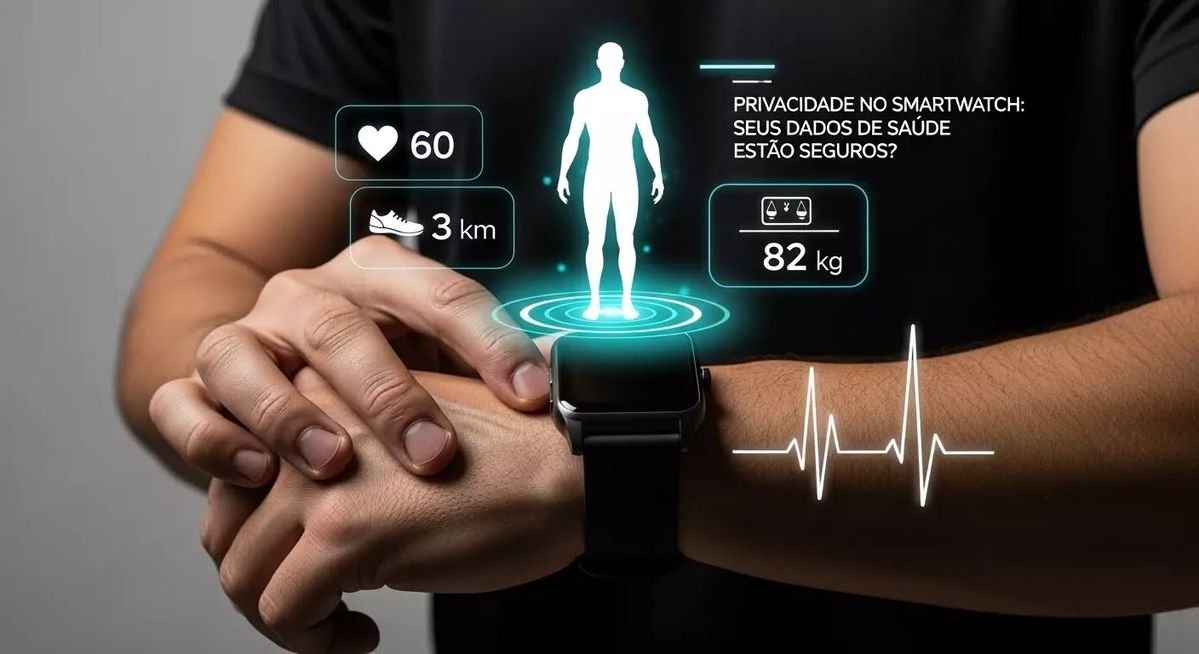
Remote monitoring technologies can collect information from devices such as wearable sensors and connected medical equipment.
AI can analyze some of this information and identify patterns that may require attention.
For example, systems may analyze trends in certain measurements over time.
The purpose can be to support monitoring rather than continuously requiring manual review of every data point.
These systems need appropriate validation because inaccurate alerts can cause unnecessary concern, while missed alerts can create serious problems.
AI in Mental Health Research
AI is also being explored in areas related to mental health.
Researchers are investigating whether AI can analyze language, behavioral patterns, and other information to support research and potentially identify signals associated with certain conditions.
However, mental health is complex, and AI systems cannot fully understand a person’s experiences or circumstances.
Human professionals remain important for assessment, communication, diagnosis, and treatment.
AI applications in this area require careful attention to privacy, accuracy, bias, and ethical considerations.
Benefits of AI in Healthcare
AI can provide several potential benefits.
Faster Data Processing
AI can process large amounts of information quickly.
This can be useful in research, medical imaging, administrative work, and information management.
Reduced Administrative Work
Automation can reduce repetitive tasks and allow healthcare workers to spend more time on patient-related activities.
Decision Support
AI can provide additional information or highlight patterns that healthcare professionals may want to investigate.
Research Support
AI can help researchers analyze large datasets and identify potential areas for further investigation.
Improved Efficiency
Automating selected workflows can help healthcare organizations manage resources more efficiently.
Challenges of AI in Healthcare
AI also introduces important challenges.
Accuracy
AI systems can make errors. A system that performs well in testing may still produce incorrect results in real-world situations.
Bias
AI models can reflect biases in their training data.
If certain populations are poorly represented in the data, the system may not perform equally well across all groups.
Privacy
Healthcare information is highly sensitive.
Organizations need strong security measures and appropriate policies when using AI with patient data.
Lack of Transparency
Some advanced AI models can be difficult to interpret.
Healthcare professionals may need to understand why an AI system produced a particular result, especially when the output affects an important decision.
Accountability
When AI contributes to a healthcare decision, organizations need clear responsibility for reviewing and acting on the result.
AI Does Not Replace Healthcare Professionals
One common misunderstanding is that AI will completely replace doctors and other healthcare professionals.
In reality, healthcare involves communication, physical examination, professional judgment, ethical decisions, and understanding individual circumstances.
AI can assist with specific tasks, but healthcare professionals remain responsible for interpreting information and providing appropriate care.
The most useful model is often collaboration between AI systems and trained professionals.
Human Oversight Is Essential
Healthcare is a high-impact environment, so AI systems require careful oversight.
Before using an AI system in a clinical setting, organizations need to evaluate its performance, limitations, security, and suitability for the intended purpose.
Human professionals should review important AI-generated results.
The level of oversight should depend on the risk associated with the task.
A system that summarizes administrative information may require a different level of review than one that assists with clinical decision-making.
Importance of Data Quality
AI systems depend heavily on data.
If training data is incomplete, inaccurate, outdated, or poorly labeled, the resulting system may produce unreliable results.
Healthcare organizations therefore need strong data management practices.
Data should be collected, stored, and processed according to applicable privacy and security requirements.
Better data quality can contribute to better AI performance, although high-quality data does not guarantee perfect results.
The Future of AI in Healthcare
AI is likely to become more integrated into healthcare technology.
Future systems may combine text, images, laboratory information, sensor data, and other forms of information.
AI tools may become better at helping professionals summarize records, analyze medical images, organize research, and manage administrative workflows.
The development of these systems will likely involve continued testing, regulation, research, and collaboration between technology companies and healthcare professionals.
The goal should be to create AI systems that are useful, safe, transparent, and appropriately supervised.
How Patients May Experience AI
Patients may interact with AI without always realizing it.
AI may be used behind the scenes to organize medical records, schedule appointments, process administrative information, or support diagnostic workflows.
Patients may also interact directly with AI-powered communication tools.
Healthcare organizations should clearly communicate when AI is being used and provide appropriate options for human assistance when necessary.
Ethical Considerations
Ethics will remain an important part of AI development in healthcare.
Questions include how patient data should be protected, how automated systems should be evaluated, how bias should be reduced, and who is responsible when an AI-assisted process produces an error.
Healthcare organizations must balance innovation with patient safety and privacy.
AI should be introduced in ways that support patient interests rather than simply focusing on automation.
Conclusion
Artificial Intelligence is transforming healthcare by providing new ways to analyze information, support medical imaging, assist research, automate administrative tasks, monitor data, and improve certain workflows.
AI can process large amounts of information quickly and help healthcare professionals identify patterns that may require further attention.
At the same time, AI has important limitations. It can produce inaccurate results, reflect bias, create privacy concerns, and be difficult to interpret in some situations.
Healthcare is a field where human oversight is especially important. AI should support qualified professionals rather than replace human judgment.
As the technology develops, the most valuable healthcare AI applications are likely to be those that combine computational capabilities with professional expertise. With appropriate testing, privacy protections, security measures, and responsible implementation, AI can become an important tool for improving healthcare research and delivery.





Leave a Reply